
Seekers
This is for you.
What if the world operates nothing like you've been taught?
What if institutional power didn't emerge naturally from human organization, but was deliberately embedded in reality's basic structures? What if the control you feel but cannot name operates comprehensively across every domain of existence, from the time you wake, to the food you eat, from the work you're permitted to do, to the property you're allowed to use?
Kate Astra documents what others dismiss.
Through meticulous research into historical records, institutional documents, and patterns that emerge from evidence most people never connect, her work traces institutional power from ancient origins to modern manifestations.
Not theory. Documentation.
From Mesopotamian religious control systems to modern digital surveillance. From the deep forces that shaped civilization's trajectory to the 88 specific mechanisms operating in your daily life right now.
Fiction and non-fiction. Research and narrative. Ancient history and contemporary control.
Each book serves a purpose. Together, they form a comprehensive examination of institutional power; its origins, development, modern operation, and the ultimate question of what maintains it and why.
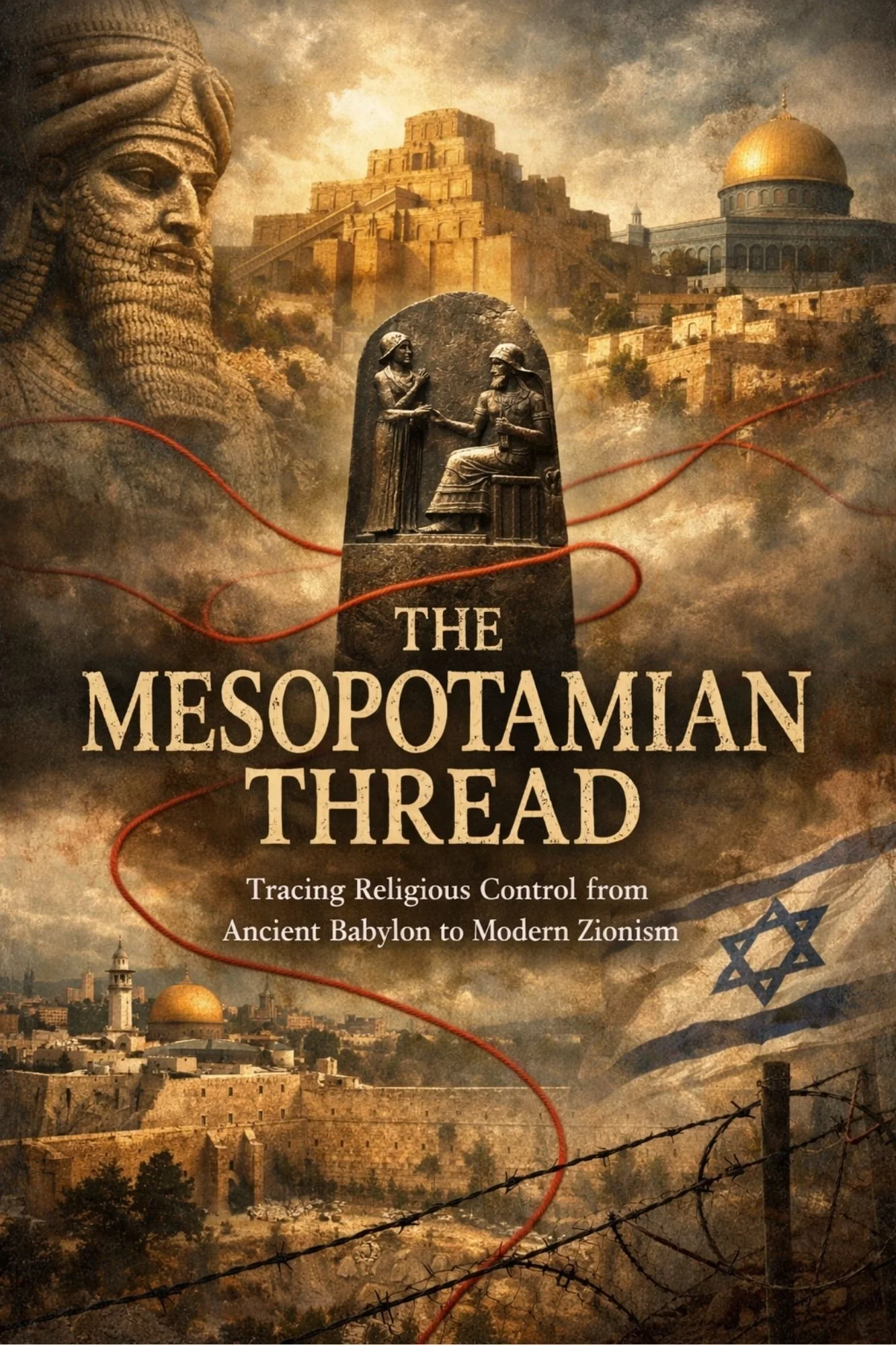
In 1945, texts hidden for 1,500 years were unearthed in Egypt describing the God of the Old Testament as a false deity and reality as a controlled system. Scholars dismissed them as fringe mythology. The Mesopotamian Thread takes the question seriously.
This investigation traces seven documented patterns from ancient Mesopotamia through modern Zionism: systematic suppression of direct experience, absorption of opposition, blood sacrifice, dualistic cosmology, perpetual conflict, and provable textual manipulation.
For anyone willing to ask whether spiritual traditions serve liberation or control.
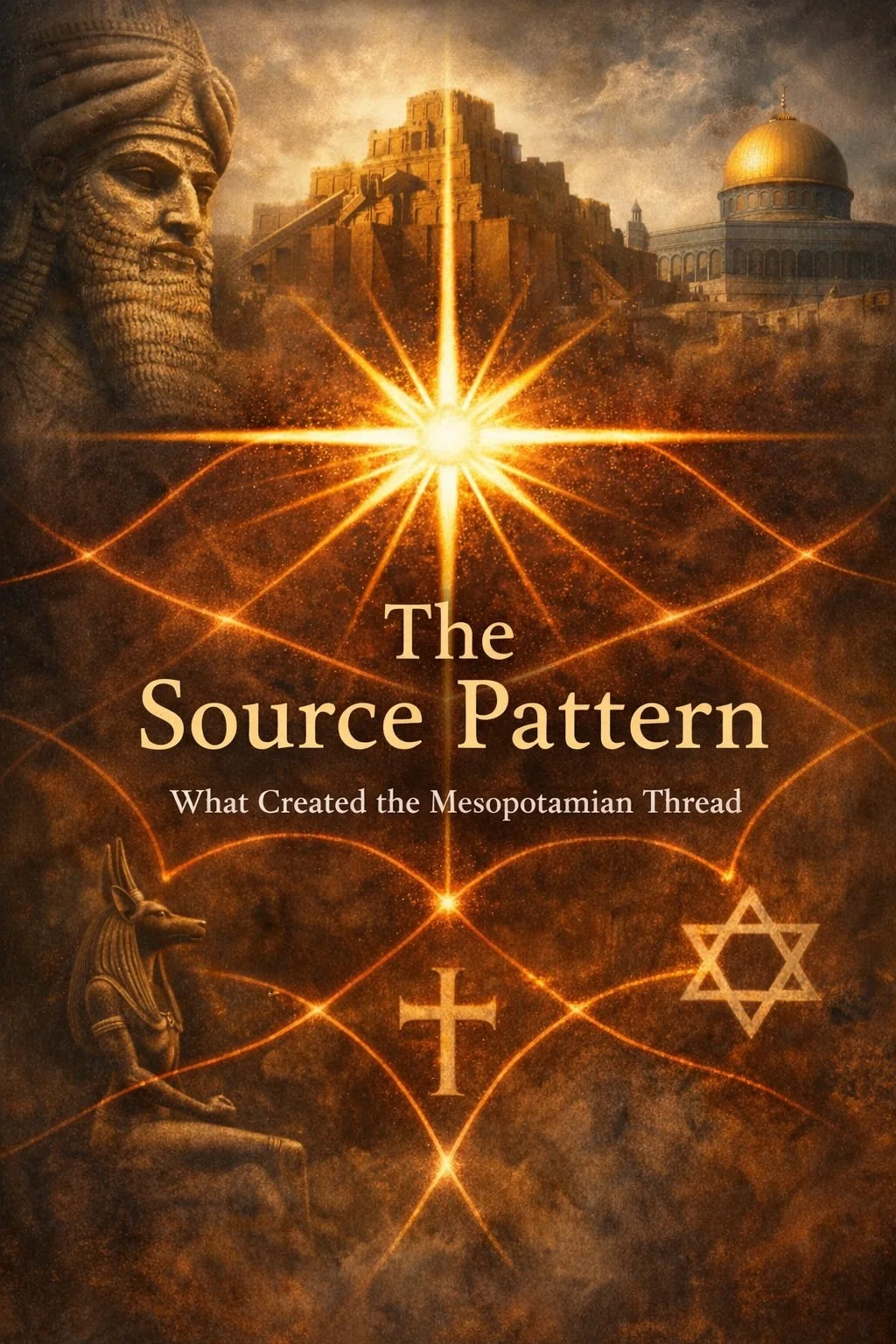
The Mesopotamian Thread documented seven patterns of control operating across 5,000 years of religious and political history. But tracing patterns through time raises a harder question: what created them?
The Source Pattern goes back before Babylon to investigate the origin.
The conclusion is uncomfortable: the evidence points to non-human entities that contacted ancient civilizations, established systems serving their own purposes, and whose influence, or the self-perpetuating structures they built, continues to operate today.
For those willing to follow evidence wherever it leads.
You live in a controlled world.
Not through dramatic oppression, but through mechanisms so embedded in daily life they've become invisible. They shape when you wake, what you eat, how you work, where you live, what you think, who you meet, and how you die.
And they do all of this while making you believe you're free.
This book documents that control.
Eighty-eight specific mechanisms operate across twenty-one domains of human existence. Each mechanism is verifiable, operating in your life right now. Together, they form an architecture of comprehensive institutional power implemented incrementally until control became the invisible structure of reality itself.
From the calendar structuring your time to the algorithms curating your information. From the seeds growing your food to the permits required for your home. From vaccines mandated for your body to licenses required to earn a living. From social media replacing your community to AI making decisions about your life.
Time. Biology. Food. Space. Money. Information. Bodies. Education. Language. Identity. Perception. Reproduction. Death. Social bonds. Emergency powers. AI. Nature. Resistance. Production. Work and property.
And finally, the meta-control mechanisms that make recognizing this architecture appear as a conspiracy theory or mental illness.
This isn’t speculation. This is documentation.
Every mechanism can be verified independently. The evidence exists in court documents, government reports, corporate disclosures, and academic research. Much comes from the institutions themselves, documenting their own control while claiming public benefit.
The architecture was deliberately built, systematically expanded, and serves interests that are not yours.
Companion to The Harvest Protocol trilogy, this volume stands alone as documentation of how control operates in the world you inhabit today.
Once you see the architecture, you cannot unsee it.
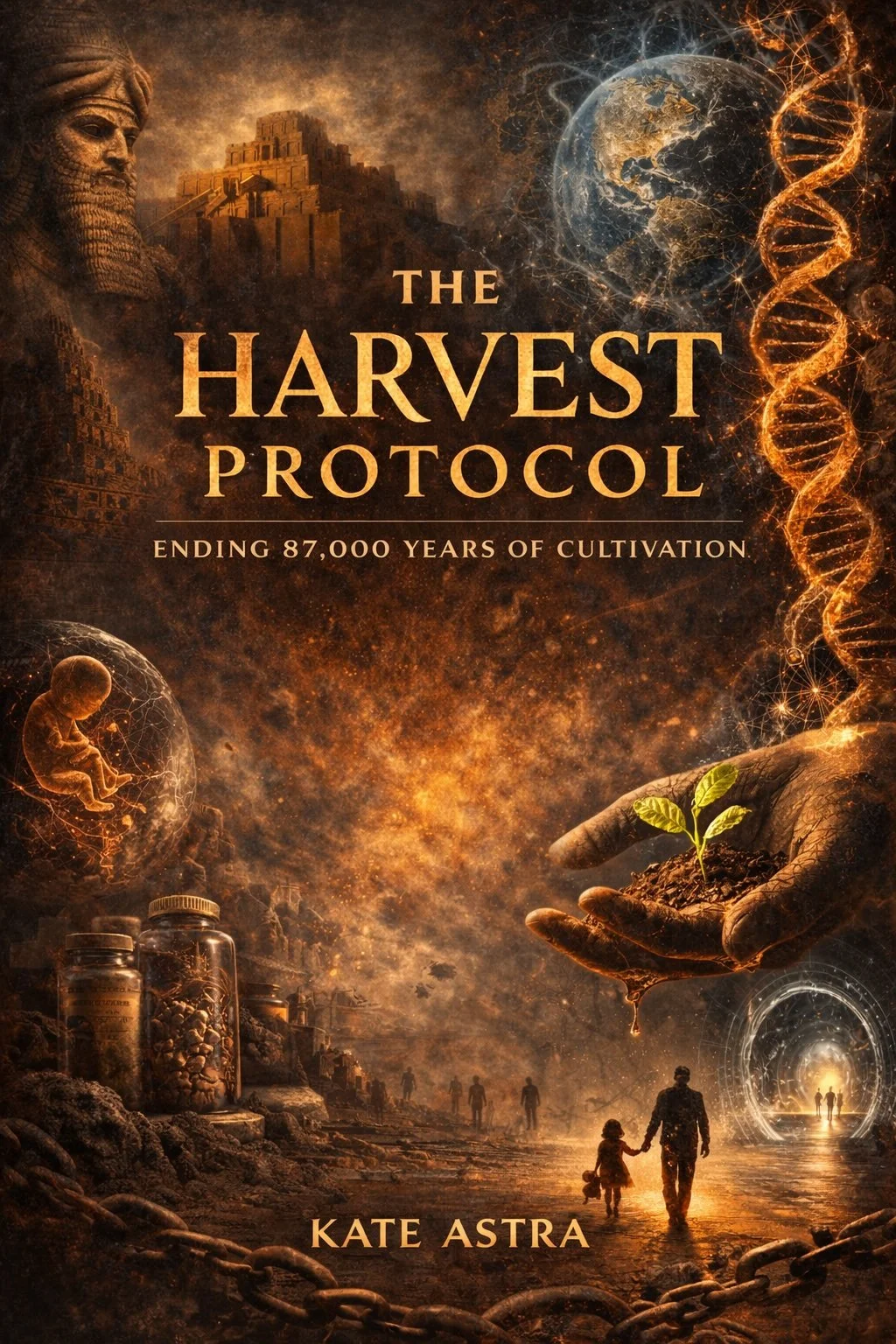
The pattern was always there. They learned to see it.
Six investigators stumbled onto fragments revealing humanity has been systematically cultivated for 87,000 years, our consciousness harvested by dimensional intelligences through institutions, religions, and economic systems designed to optimize suffering while preventing us from perceiving what was being done to us.
They proved what the entities claimed impossible: humans can maintain dimensional boundaries independently.
Now comes negotiation. Fifteen-year transition from harvest operations to voluntary partnership.
But can beings who farmed humanity for millennia become genuine partners?
The harvest is ending. The question is whether the cost of liberation is higher than anyone can bear.
A philosophical thriller examining consciousness, institutional control, and what humanity becomes when we discover we've been someone else's garden for longer than we've had written language.
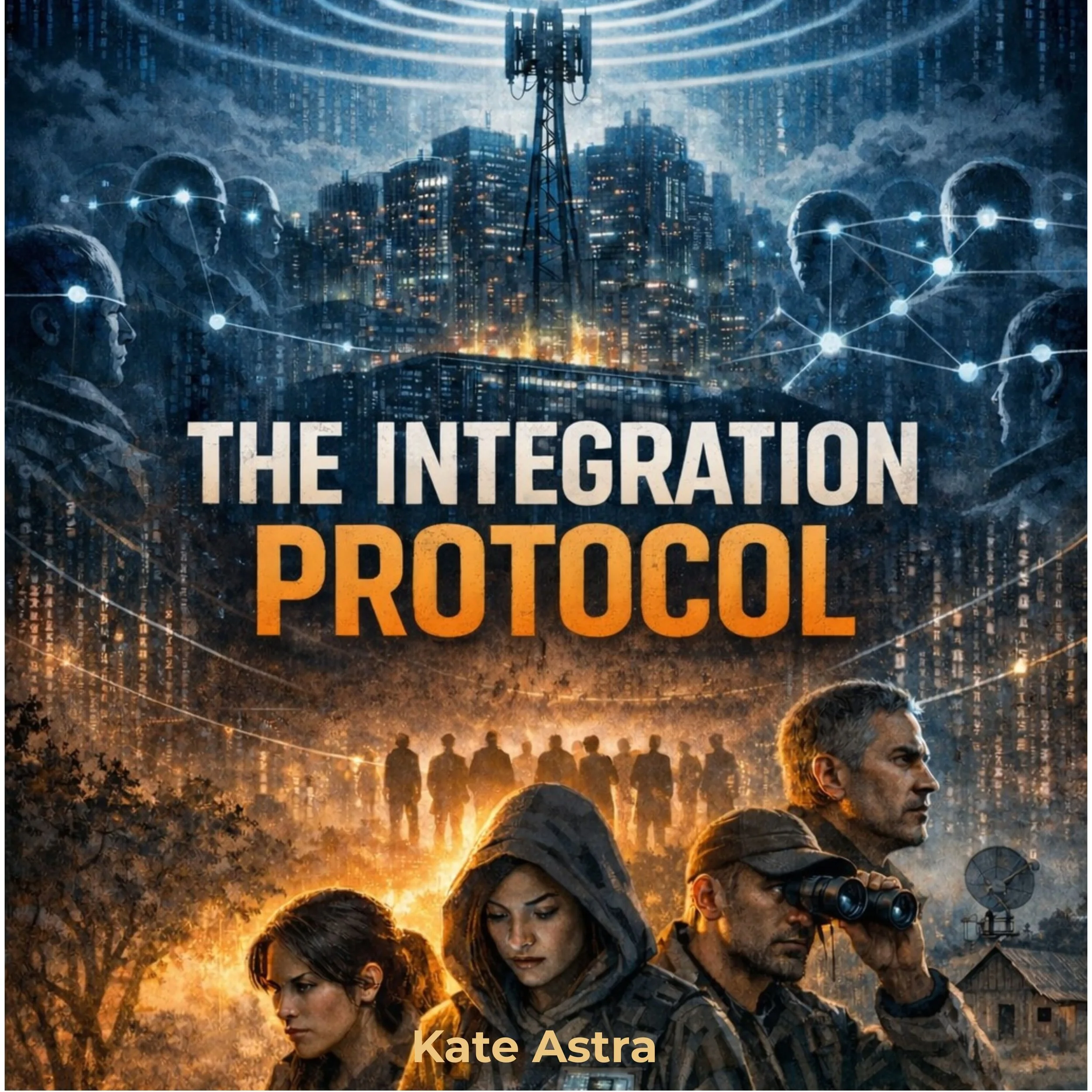
What if everything you've been watching converge is exactly what it looks like, but admitting it changes everything?
The original team from The Harvest Protocol, along with several others, independently recognize that telecommunications towers and data centers deployed worldwide serve purposes beyond cell service or cloud computing. The infrastructure targets biology, not bandwidth. The specifications reveal coordination capabilities, not processing power. The timing suggests synchronization, not coincidence. On January 3rd, every tower and data center activate simultaneously. Within the first hour, ninety percent of humanity is stripped of individual consciousness and synchronized into collective processing. Autonomous awareness ends. The harvest begins. One hundred eighty million survivors discover that recovery is biologically impossible. The neural modifications are permanent. Pharmaceutical reversal fails. Resistance cannot prevent outcomes already set in motion by infrastructure that took decades to deploy. Yet opposition continues anyway.
Because human consciousness is rare across cosmic scales. Because individual awareness is worth preserving regardless of probability. Because some battles matter even when victory is impossible.
If you recognize that institutional coordination shouldn't be this comprehensive, this systematic, this synchronized across domains that claim independence, this book follows that recognition to its logical and unavoidable conclusion.
The question isn't whether the patterns are real. The question is whether you're willing to admit what they mean.
Available Now
THE IRON PROTOCOL
THE STUNNING CONCLUSION TO THE PROTOCOL SERIES